
24
2021
-
12
First Aid Education Workshop – Nanjing Venue
Source:
First Aid Education Class – Nanjing Venue
Everyone is connected to “emergency rescue”; no one can avoid experiencing moments of urgency, or even unexpected accidents.
To further promote public awareness of emergency first-aid knowledge and skills and to enhance our colleagues’ ability to respond effectively to emergencies and accidental injuries—both in terms of emergency rescue and self‑rescue as well as mutual assistance—a “First‑Aid Workshop” was held at the Nanjing headquarters on the afternoon of December 23, featuring expert instructor Xi Xiaohui, Chief Cardiologist at Ciming Center, who brought extensive theoretical expertise and practical experience.
This training session is divided into three main components: prevention of cardiovascular and cerebrovascular diseases, practical techniques for cardiopulmonary resuscitation, and the proper use of automated external defibrillators (AEDs).
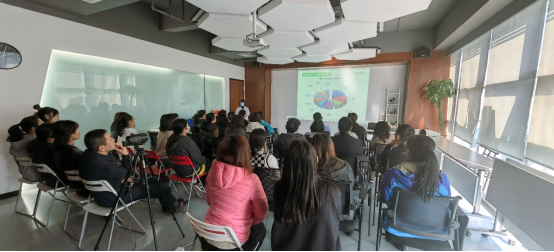
Training venue

Cardiopulmonary resuscitation
During the CPR first-aid demonstration session, the trainer performed a CPR procedure on a mannequin:
1. As soon as possible, confirm the current condition of the injured and the patient.
2. Ensure on-site safety before emergency responders enter the scene to administer first aid;
3. Have those nearby call emergency services immediately and seek assistance from qualified medical personnel.
4. Administer first aid to the injured using the correct procedures.
Following the demonstration, colleagues on site were eager to put their skills into practice, and with guidance from the trainer, they all mastered the essential techniques and proper first-aid procedures.


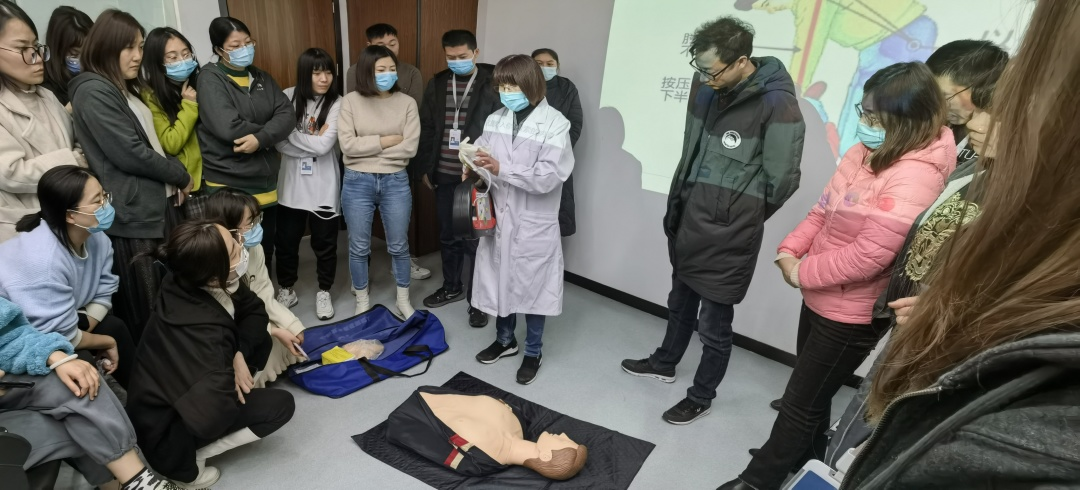
AED defibrillator
After the CPR demonstration, the use of an AED (automated external defibrillator) was also demonstrated and practiced.
1. Turn on the switch;
2. Attach the electrodes according to the voice prompts (the AED’s electrode pads are equipped with conductive adhesive; peel the pads off the plastic backing and affix the adhesive side to the patient’s chest).
3. Press the “Start” button (do not touch the patient unless instructed by voice prompts), and perform cardiopulmonary resuscitation in the absence of an AED defibrillator.

Through this first-aid training, everyone has gained a solid understanding of emergency response and mastered essential first-aid skills. In the face of accidents and illnesses, life is incredibly fragile; the more people who know how to perform CPR, the better equipped we are to offer timely assistance to others in an emergency—always prioritizing our own safety.
Finally, I hope everyone maintains a healthy sleep schedule and engages in regular exercise, so they can enjoy robust health.
Related News

Official Social Media

WeChat Official Account
@商络电子Sunlord
WeChat Video Account
@商络电子Sunlord
@sunlord-electronics
Copyright © 2024 Sunlord. All Rights Reserved. Nanjing Sunlord Electronics Co., Ltd.All rights reserved.